

Facts about Memorial Day
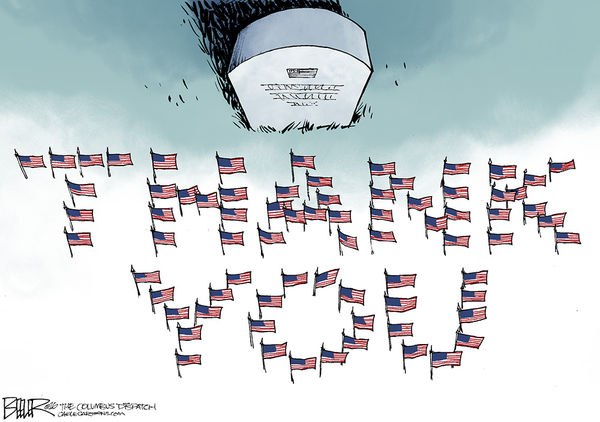
The facts and information which follows is OPERATION WE ARE’S efforts to re-educate and reinform Americans regarding the importance of Memorial Day and provide meaningful ways to honor the fallen.
Memorial Day is a national holiday set aside to honor military service members who died fighting in a war.
Memorial Day is sometimes confused with Veterans Day. On Veterans Day, November 11, we thank and honor those who served in the military.
Major General John A. Logan, a Civil War veteran, founded Memorial Day in 1868. Following the Civil War, a small group of women went to a cemetery in Columbus, Mississippi and honored the Soldiers of both the North and the South by putting flowers on their graves.
Memorial day was initially called Decoration Day because graves were decorated with flowers and flags. In May of 1874, Mrs. Laura D. Richardson of Knoxville, Tennessee, Chairperson of a committee to obtain flowers for decorating the graves in the national cemetery of Knoxville, saw flags in a store window. She had an idea and subsequently purchased the flags and had the local lumber mill provide the wood for tiny flagpoles. This began the movement to decorate graves with flags.
It was changed to Memorial Day to put the emphasis on the Fallen, not the graves.
Initially it was observed on May 30, but in 1971, when it became a national holiday, Congress changed it to the last Monday of May to create a three-day weekend. This change, some argued, would contribute to Americans neglecting the true meaning and observances of the holiday.
Poppies, a symbol of death in war, have been worn on Memorial Day since 1915 to remember the
Fallen. This movement was initiated by an American teacher named Moina Michael who read the wellknown poem by a Canadian military doctor, “In Flander’s Fields.”
Every year on Memorial Day, the president of the United States gives a speech and places a wreath at the Tomb of the Unknowns at the Arlington National Cemetery.
“Taps” is often played at Memorial Day Ceremonies.
On Memorial Day, batteries on military installations fire a 21-gun salute to the nation’s Fallen. Batteries at Naval stations and on ships also fire a salute of 21-minute guns.
In an effort to remind and re-educate Americans about the true meaning of Memorial Day, the NATIONAL MOMENT OF REMEMBRANCE on Memorial Day was established by Congress in 2000. Americans are asked to pause at 3 p.m. local time and remember the Fallen.
Suggestions on ways
to observe Memorial Day
Attend a local Memorial Day concert or service.
Help your local veterans groups (VFW, American Legion, etc) to replace worn out grave markers/flags of deceased veterans at your local cemetery (monetarily if not physically). Some civic groups help put flags or flowers on the veteran’s graves before Memorial Day. Consider your cemetery’s guidelines.
Visit a local or national cemetery.
Pause at 3 p.m. local time for the duration of one minute on Memorial Day for the National Moment of Remembrance.
Fly your flag at half-mast from sunrise until noon only, then, raise it briskly to the top of the staff until sunset. This may be a good time to check the condition of your flag. If it is time to replace it, do not throw it away; bring it to your local American Legion for proper disposal.
Wear a poppy. They are available from American Legion Auxiliary volunteers and Veterans of Foreign Wars in exchange for donations to assist disabled and hospitalized veterans in their local communities.
While you enjoy the freedom we celebrate with family and friends this Memorial Day weekend, make the choice to incorporate the true meaning of Memorial Day in your celebration!
Local News

Discussions and approvals: Tama County Supervisors meeting

Pete Lyon to be inducted into 2026 Iowa 4-H Hall of Fame
Ahrens discusses potential conference change with school board
Tama County U.S. 63 closure schedule update
The tentative start date to begin breaking up the existing pavement is Aug. 10. Once that begins, the pavement will ...
Louise & Lucile Hink Tama Public Library receives accreditation from the State Library of Iowa
DES MOINES — The State Library of Iowa announced that the Tama Public Library has met the conditions for state ...
South Tama Community School District recipient of DOE award
DES MOINES — The Iowa Department of Education recently announced more than $2.35 million in competitive grants ...