Commercial property taxes in Tama Co. to raise 4%

Jerry Witt
From Jerry Witt
Tama County Assessor
Property assessments for commercial property in Tama County were raised about 11-12 percent for the 2017 assessment year by the assessor. The Iowa Department of Revenue recently released an Equalization Order of a seven percent decrease that will be applied to the values that were mailed to commercial property owners in the spring. This will result in a net increase of approximately four percent in commercial property value for the 2017 assessment year.
There is no opportunity for property owners to protest this decrease to the board of review. If there was an Equalization Order that increased values the board of review would convene and be able to receive protests of the increase only.
There were not any Equalization Orders for agricultural, residential, or multi-residential classes in Tama County.
The Assessor’s Office is only responsible for assessed value. The rollback for the 2017 assessed values was recently released last week by the Department of Revenue. The levies for the 2017 assessed values will be determined in the spring.
Equalization Orders are based on sales of that property class in the county. If most of the sales are higher than assessed values then the assessed values must be increased. Only arms length transactions are used in the sales study. Some examples of non-arms length transactions would be a family sale, estate sale, quit claim deed, or sale of a foreclosed property. Sales that the Iowa Department of Revenue considers to be arms length transactions are posted on a website that the assessor has access to. Typically one year of sales is used for this analysis, but the director of Revenue can add previous years sales.
The final list of sales that will be used is finalized on May 1st, but assessment notices must be mailed by April 1st. I usually try to have notices out by the middle of March.
Every other revaluation year since I have been here the Iowa Department of Revenue would do 12 appraisals to shuffle in with the arms length sales. This is done for smaller counties that do not have many commercial sales.
These appraisals typically closer to the assessed value than some of the sales may be. We usually have about ten sales per year. Appraisals were not completed for the 2017 assessment year. In February/March, Tama County was looking at a 25 percent increase in commercial values, due to the sales.
There is no way I could justify an increase in commercial values for Tama County. This would be ridiculous for a rural county to increase this much in a two year period that does not have a large amount of new businesses. I used two years of sales to arrive at the 11-12 percent increase.
This July the Iowa Department of Revenue established a minimum number of sales needed for sales analysis. Assessors had never known how many sales was enough. The magic number is now fifteen. If there are not fifteen sales in one year for the commercial or multi-residential classes, two years will be used. If the county has the twelve appraisals done by the Department of Revenue, they will need only three sales in one year to hit the magic number.
Tama County had a couple of sales removed from the good list from when the sales analysis was performed before sending assessment notices and two years of sales were used for the analysis for Equalization Orders. This resulted in the commercial values in Tama County being seven percent too high. I agreed with their analysis based on the sales and looking at the sales we have so far in 2017. The 2017 sales were not used by the Department of Revenue for their analysis, but they give a good indication of where values are headed.
The Revenue Department looks to equalize assessments every two years comparing what is termed the assessors’ abstracts to an a “sales assessment ratio study” independently , according to a department news release.
The release explains equalization is important because it helps maintain equitable assessments among classes of property and among assessing jurisdictions. This contributes to a more fair distribution of state aid, such as aid to schools. It also helps to equally distribute the total tax burden within the area.”
Business
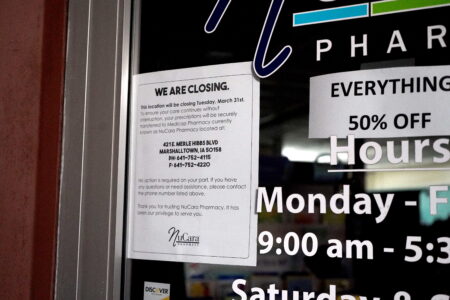
Four Iowa NuCara pharmacies shutter amid $22M lawsuit, possible OneroRX acquisition
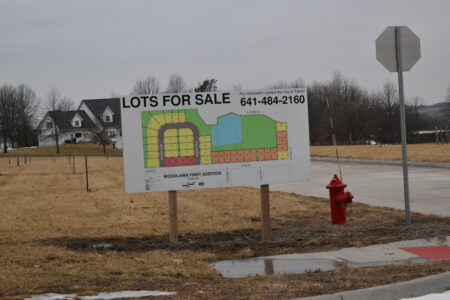
Progress 2026: Woodlawn development aims to expand housing opportunities in Toledo
Best of the Best is back
In our Best of the Best Awards, you — the readers — have the final say. Every year, our community looks forward ...

The new sparkplugs

‘It feels like family here’