Property taxes, eminent domain debate to return in 2026 Iowa legislative session
DES MOINES – Iowa lawmakers are heading into the 2026 legislative session with several new leaders – but many of the issues expected to take top priority are subjects left unresolved in 2025, namely eminent domain and property taxes.
Lawmakers presented legislation on both of these issues during the 2025 legislative session, but neither became state law. Republican leaders had brought up property taxes as one of their top concerns heading into the last session, but a measure failed to reach the governor’s desk.
Rep. Bobby Kaufmann, who is now House majority leader, and Sen. Dan Dawson (R-Council Bluffs) introduced legislation in 2025 to eliminate the state’s “rollback” system for calculating property taxes, calling for a move to a “revenue-restricted” system limiting levy rate growth alongside other changes. This proposal went through multiple iterations, but failed to come to a floor vote.
While the push for action on property taxes was led by legislative leaders last year, Gov. Kim Reynolds has said she plans to introduce a proposal to lower property taxes in 2026. Over the past few months, she and other Republican leaders have held meetings with local government and community leaders across the state to discuss how to approach the subject.
The governor has warned that reducing property taxes could mean a reduction in local government services, saying in May that Iowans should not expect “level of government that we have and expect the property taxes to go lower.” However, she said there are areas where services can be consolidated or streamlined in an effort to more efficiently use taxpayer dollars.
Reynolds has also said she is considering a property tax freeze for seniors as another strategy to ease Iowans’ economic burden.
“We have to see what the numbers look like,” Reynolds told reporters in November. “We can’t shift it to the state, that’s not property tax relief … it has to be sustainable.”
House Speaker Pat Grassley said House Republicans are also focused on tackling property taxes – saying the 2025 discussions on the issue were a “good lesson” in how to best craft legislation moving forward. He said “there’s going to be pieces of … the bills from last year that are probably not going to be included” in this year’s legislation. He said the caucus wants to present a plan that favors the taxpayer over the taxing entity, and one that is simplified from previous discussions.
“It needs to give certainty to the taxpayer, and at the same time, we need to make sure it’s something that’s understandable,” Grassley said. “Because every property tax conversation we’ve had for 20 years is very difficult, very in the weeds, very hard to understand. I think that’s why we’ve been unable to really get an overall reform of the system itself.”
Senate Minority Leader Janice Weiner said Democrats are willing to work across the aisle to address high property tax costs, and echoed the state’s property tax system needs to be simplified and more transparent. However, she said Senate Democrats want to ensure tax relief is reaching the people in the most need, and that local communities can weather the reduced income.
“It’s really essential that local communities be at the table, because we can’t risk putting public safety and other really important things for local communities at risk – and they’re the ones who have to pay the bills, they’re the ones who are now facing the results of previous mandates,” Weiner said. “… And from what I’ve heard sort of across the state, they’re really frustrated. (Those) are the people who are doing the work in every city, in every county and every township, and they deserve to have a seat at the table.”
Senate Majority Leader Mike Klimesh says he expects to see bills on property taxes from the governor, House and Senate in 2026, and that the session will be spent discussing areas where all parties agree.
“At the end of the day, the conversation will be, ‘How deep in the weeds do we go?'” Klimesh said. “We have a 40-year-old system — do we slap Band-Aids on, right? My perspective is sometimes it’s going to take it down to the chassis and rebuild it from there. But at the end of the day, we’ll have to sit on a table and build a consensus.”
House Minority Leader Brian Meyer said House Democrats plan to roll out a property tax proposal in January, led by Rep. Dave Jacoby (D-Coralville) , ranking member of the House Ways and Means Committee. The legislative proposal will focus on lowering residential property taxes while “protecting schools, protecting first responders,” he said.
Consensus on eminent domain remains elusive
Another issue carrying over from 2025 is how to address the use of eminent domain in carbon capture pipeline projects.
Legislation related to pipelines was approved by the Legislature in 2025. Sending the bill to Reynolds’ desk was a contentious journey. The measure only made it to floor debate in the Senate after 12 GOP senators signed a letter saying they would not vote on spending bills and allow the session to end until a measure on eminent domain was debated.
The Senate passed the bill in a 27-22 vote, but Reynolds vetoed the measure, saying the legislation combined “valid concerns with vague legal standards and sweeping mandates that reach far beyond their intended targets.”
There is still a strong push from Republicans calling for state lawmakers to address the subject, specifically to address some landowners’ issues with the Summit Carbon Solutions project. But some of the same concerns from Republicans, including the governor and Senate leaders, who opposed last year’s legislation, remain in play — meaning a consensus on how to tackle the property rights issue has yet to be reached.
Klimesh said he plans to introduce legislation within the first week of session that would allow companies to seek voluntary easements within a 10-mile radius of the corridor approved by the Iowa Utilities Commission in the permit process. This proposal, Klimesh said, would allow carbon sequestration pipeline projects to move forward without having to use eminent domain to build a pipeline against a property owner’s wishes.
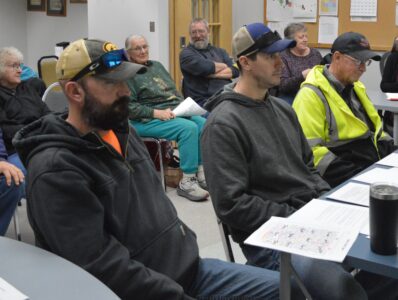
“I think, at the end of the day, that allows me to exercise my property rights, by denying access to my property, it allows my neighbor to exercise their property rights by entering into a voluntary easement,” he told Republicans at the Westside Conservative Club.
This proposal was one of the suggestions offered in an amendment to the 2025 legislation by Sen. Mike Bousselot, R-Ankeny, which was not adopted during Senate debate.
This approach may differ from how Iowa House Republicans plan to tackle the subject. Grassley said House Republicans plan to introduce legislation next year focused specifically on the use of eminent domain. Under current law, property owners can be forced to allow easements on their land for projects considered in the public’s interest at a price set by a county compensation commission. Part of the dispute over carbon pipelines is whether the projects are in the public interest.
“Where I think we end up this session, whatever comes from the House, is going to be a little bit more tailored to eminent domain,” Grassley said. “I know the bill was a little bit broader than we passed over to the Senate last year, that the governor then vetoed. …The caucus, in the meantime, has recognized that that’s been where we’ve had our focus for the last several years – it’s been around eminent domain.”
The use of eminent domain in pipeline projects is not a party-line issue — the measures passed with both bipartisan support and opposition in both chambers in 2025.
Meyer said he does not see the proposal brought up by Klimesh on expanding the pipeline corridor as a way to put the issue to rest, saying he believes House Republicans will aim for more substantive action on eminent domain.
Meyer said he believes most Democrats understand there are competing interests in how to address the issue, as carbon capture pipelines are “an important part of the future of agriculture moving forward,” but that there are real questions on “how do we protect property rights” brought up by the projects.
Meyer said he believes there is a path forward to address this issue – but Republicans, who have held a trifecta of control at the Capitol for several years, will have to collaborate with Democrats to reach the finish line.
“We’re going to have to see where it goes,” Meyer said. “There’s a solution here. It’s just that they’re so used to not having to work with Democrats or anybody else.”
Cancer, water quality discussions expected
Legislative leaders also said they predict to field more discussions on issues related to Iowans’ health in 2026. As the state has the second-highest cancer incident rate in the country, officials have said they plan to investigate why Iowa’s cancer rates are growing while national rates lower.
Some advocates say environmental factors – and problems caused by agricultural products – are behind some of these numbers. Klimesh was questioned by a voter at the Westside Conservative Club about why lawmakers have advanced legislation in several previous sessions to shield pesticide companies from certain lawsuits – specifically, in response to numerous lawsuits launched against Bayer, the manufacturer of RoundUp, which claim the product gave plaintiffs cancer.
Klimesh said the previous versions of the legislation did not stop people from suing companies like Bayer over claims like negligence or fraud, but over specific “failure to warn” claims related to pesticide labels issued by the U.S. Environmental Protection Agency.
“At the end of the day, they did not take away your rights to sue that company for cause in any way, shape or form,” Klimesh said. “All it simply said was you can’t sue them for not meeting a requirement the federal government won’t let them meet. At the end of the day, what concerns me is, if we allow that to continue, glyphosates will come in from China. What’s the recourse then? There’s no way you’re going to sue a Chinese company, right? That’s an impossible hurdle.”
Grassley said he believes there are “merits to wanting to make sure that these types of products are made here in this country – but not just this country, in our state.” He said while there was not enough support to move the bill forward last year, the 2026 session could be different.
“Not knowing what the future … looks like, if that’s something the caucus wants to move forward with, I think we’ll be open to that conversation,” Grassley said.
Another environmental issue that may be impacting Iowans’ health is water quality. Concerns about nitrate levels in Iowa’s waterways have heightened over the past year, as nitrate concentrations reached near record highs in Iowa rivers in 2025. Experts say data shows nitrate concentrations have increased in Iowa over the past decades.
Meyer said Iowa House Democrats plan to bring forward a legislative proposal to address high nitrate levels and increase water quality monitoring throughout the state.
While environmental advocates point to agricultural runoff as a contributor to Iowa’s growing cancer rates, some legislators have said other factors may be contributing. In November, Sen. Ken Rozenboom (R-Pella) said other states, like Illinois, would also be seeing similarly high cancer rates if agricultural pollution was the driving force behind the state’s cancer rates.
“Once we have apparent solutions or answers, then we can start changing policy or making policy,” Rozenboom said. “But I think most of us have more questions than answers yet.”
Klimesh said lawmakers are also planning to continue to partner with institutions like the University of Iowa Health system, “to make sure that they’re doing research, point us in the right direction where we can be helpful with that.”
Weiner said as research is ongoing, the Legislature should focus on finding ways to “deal with some low-hanging fruit” and take steps to mitigate new instances of cancer.
“The cancer rates we’re seeing are result from exposures 20, 30 years ago, we can’t change that now,” Weiner said. “(But) we know we have high radon levels in the state. There are unregulated tanning beds there, you know, too many Iowans are probably using one form of tobacco or other. Again, we’ll be having conversations with our Republican colleagues, but I think everybody realizes this is an issue we have to deal with.”
How leadership changes, special elections will impact 2026
Three of the top legislative leadership positions are held by people elected by their peers this year to lead their caucus for the first time – Klimesh leading Iowa Senate Republicans, Meyer leading Iowa House Democrats and Kaufmann as the new House majority leader.
These changes come amid a shake-up heading into next year’s elections – former House Majority Leader Matt Windschitl is running for Iowa’s 4th Congressional District and former Minority Leader Jennifer Konfrst is running in Iowa’s 3rd District. The former Senate Majority Leader Jack Whitver announced he will not seek reelection as he continues treatment following a brain tumor diagnosis.
The session will also be Reynolds’ last term as governor, as she is not seeking reelection in 2026.
Grassley, who was elected House speaker in 2020, said he does not foresee major changes coming from the new leadership.
“I don’t want to say business as usual in a bad way, but I think you’re going to see the House, the Senate, the governor, continue to be able to work together to be able to find resolution to difficult issues,” Grassley said. “We’ve displayed that for the last several years, taking on tough issues, and so I don’t think any of that necessarily just changes because there’s different individuals in some of the certain areas.”
A number of special elections in 2025 have also changed the makeup of the Iowa Legislature. Iowa Senate Democrats gained two seats in special elections in the past year – Sen. Catelin Drey in Senate District 1and Sen. Mike Zimmer in District 35, breaking Republicans’ supermajority control of the chamber.
There’s one more special election in the Iowa Senate left this year, scheduled for Tuesday, Dec. 30, to fill the seat left by Sen. Claire Celsi, who died in October after a battle with an undisclosed illness.
While Republicans still hold a majority in the Senate, breaking the supermajority means Democrats could exert more control in the process of appointing gubernatorial nominees, which require two-thirds majority approval. Weiner said while “there may not be a ton of appointments, there definitely will be some,” pointing to the new appointments to the Iowa Board of Regents.
She also said while two of the Senate special elections were called because of tragic circumstances – the deaths of two senators – the special election campaigns have allowed Senate Democrats to hear directly from voters about what they want from the Legislature.
“We’ve had the opportunity since the beginning of January through the end of December to talk to voters all over the state, or more specifically, to listen to voters all over the state and hear what their concerns are,” Weiner said. “… It’s great to see new faces, and it’s also been a year of loss.”
The legislative session is set to begin Jan. 12, 2026.
Local News

In Custody and Suites
Property taxes, eminent domain debate to return in 2026 Iowa legislative session
DES MOINES – Iowa lawmakers are heading into the 2026 legislative session with several new leaders – but many ...

The Premature Ball Drop

MercyOne Waterloo welcomes first baby of 2026
The double foremen